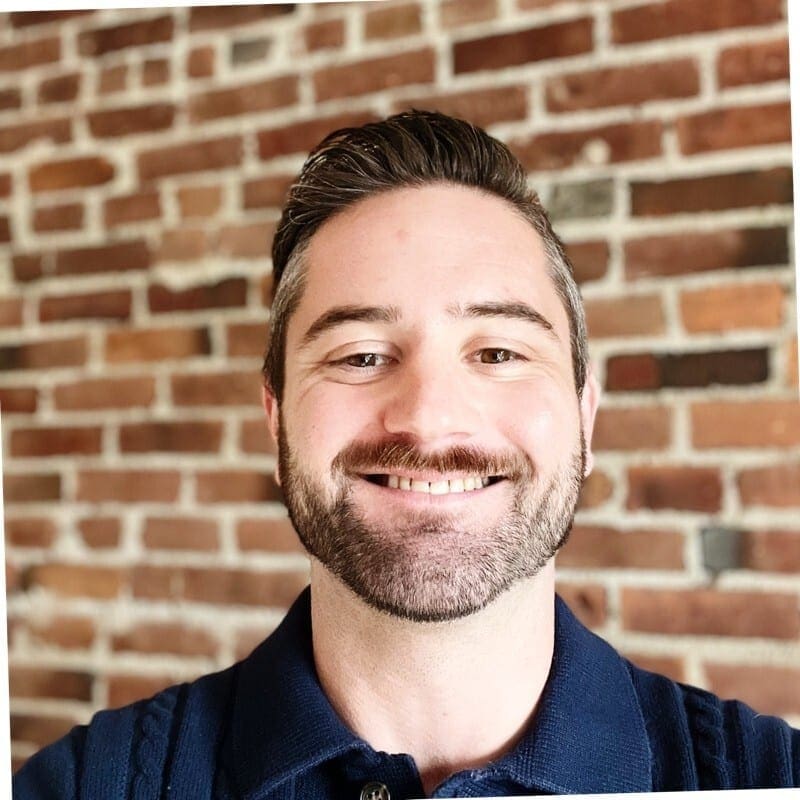
In our latest episode of What the Tech from Boast, recorded in person at Tech Thursday in Calgary, we sat down with Omar Sabbagh, CEO of Bidaya AI, to discuss how his company is using AI to level the playing field for small and mid-sized firms bidding on government contracts
Omar's journey to founding Bidaya is wonderfully nonlinear. He's a mechanical engineer by training who thought he'd be a biomedical engineer. Instead, he worked in finance doing equity research on oil and gas stocks, watched his firm transform from a traditional research company into a tech company, then decided to work at Shopify to be "in the thick of it."
Then came the Honda Accord moment.
Right around the time ChatGPT launched, Omar quit his job at Shopify to do something entrepreneurial in AI. While picking up the second key from the person he'd just bought a used Honda Accord from, he mentioned he'd quit his job to work on AI. The seller happened to teach proposal writing at the University of Calgary and asked if Omar could do a consulting contract with him.
"I did that with him, and I saw what it was like under the hood, and I was like, 'AI's gonna 10X every step of this process end to end.' Built a prototype. That prototype ended up selling to a few customers, and I was like, 'Okay, there's something here.' Raised a little bit of money, got a team together, and here we are now."
Today, Bidaya AI is an all-in-one platform for winning government contracts in a fraction of the time, with powerful discovery, analysis, and proposal writing features that generate proposals 5 times faster than legacy workflows.
The Problem: Big Firms Win on Paperwork, Not Performance
Omar explained the core problem Bidaya solves:
"The government releases a ton of contracts every day related to problems they want to solve. We decided to focus on infrastructure, architecture, engineering. Think of the parks around you, the schools, the hospitals. Every one of those started off with what's called the RFP process where the government releases a request for proposal and asks people to bid and pitch themselves to win the project."
The challenge: "That process itself is really cumbersome, and firms will win based on how well they navigate the process, not how well they can actually execute the work. The bigger teams are at more advantage than the smaller teams."
Bidaya's mission: "We wanted to level the playing field. We wanted the people who are better at doing the work to win the work, not the ones who can fill out the paperwork better."
Who they serve: "We're primarily with small and mid-sized architecture, engineering, construction firms. 99% of those firms are under 100 employees, so you can imagine they need a lot of help to stay level with the ones that are winning the big contracts. We try to make it a bit fairer for people to build our most important infrastructure here in the country."
From Wrapper to Platform: Tackling 100 Paper Cuts
When we discussed what makes Bidaya more than just an AI wrapper, Omar emphasized the importance of solving edge cases:
"When someone uses AI for a problem like this, they see the potential, but there's maybe 100 paper cuts that stop it from being useful—a thousand different edge cases. Chipping away at those one at a time is how you build, how you go from a wrapper to a platform."
The process: "You see someone struggle with something, you see someone get frustrated with something, lose trust because of something. Tackling all of those is eventually how you get something that starts to diverge from being a wrapper and start becoming a platform."
Building subject matter expertise: Bidaya's first customer was at the University of Calgary. They've hired consultants who know the RFP process intimately. Omar's co-founder was on the other side of the process and has seen it firsthand.
"Making that all come together is what's really fun about this. I'm learning more about it as things progress."
From Alberta to Singapore (and Back to Toronto)
What started as a hyper-local Alberta play quickly expanded.
The growth trajectory: "Because it's kind of a localized industry—each province has their own or each state has their own website—I thought we would just start with Alberta. Then very quickly we went on to Western Canada, and then very quickly we started doing Eastern Canada, and now we're all over the country. We've talked to over 200 firms in the country trying to help them."
The Singapore surprise: "Very recently we got our first customer in Singapore out of a Calgary referral, funny enough. One of our consultants we were working with decided to move there for a year with his wife who is from there, and realized he could bring the same expertise over there. We got our first global firm—15,000 employees. And funny enough, they've got a Canadian subsidiary in Toronto that we're now starting to work with."
The circle: "Instead of going direct to the Toronto subsidiary, we went to the mothership all the way back around. So now we've got a global presence and hope to double down on the US fairly soon."
Calgary's Secret Sauce: The Helping Hand Community
Recording in person at Tech Thursday gave us a chance to discuss Calgary's innovation ecosystem—something Omar is deeply grateful for.
What makes Calgary unique: "You've got a selection of really smart people who really want to help each other out, and that lending hand is something I've seen the most of here. The idea that, okay, we're both doing something very difficult that neither of us have seen too many examples of it working out—it's not like we're known to be a tech hub. You see a lot of those people trying to help each other out."
Examples: "Just like owning a podcast studio, letting us use an office space when we were growing in the early days. There's another company out here that let us use their space before we even had one. Small things like that just add up."
The COVID effect: "What also happened in Calgary is there were a lot of remote tech workers that ended up moving here during COVID 'cause they wanted the cost of living and the mountain lifestyle. When they moved here, I think those people are gonna become entrepreneurs. We've got a lot of the talent that's now gonna start their own companies, and that's when the ball will really roll."
The reputation: "Maybe we should be known for hospitality. Southern hospitality, but just up north. Southern Canada."
What's Next: Scaling With Processes and People
When we asked what's next for Bidaya, Omar emphasized the shift from doing things manually to scaling them:
The philosophy: "One of our philosophies is you do it manually, then once it's good, then you try to scale it. We've done a number of things well, but now we're at the phase of trying to scale—customer acquisition, being able to provide the same white glove support that we try to do with every single firm, and even having a good engine on the product side to translate what people are telling us into something usable, functional, reliable."
The challenge: "That is a combination of processes and people. On the processes, it's something I've had to learn. I'm not a process person by default, so had to get better at that. On the people side, it's finding the right team members."
The AI employee balance: "We're at an interesting time in AI right now where you can have a lot of AI output per employee. You can have a small team go really, really far. They can go even further with a bigger team. We're trying to balance that—how can we stay as efficient as we are and have each incremental team member contribute just as much as the ones that were contributing before?"
The culture piece: "AI employees are great, but they don't come out with you for dinner. You gotta have the AI employees do the work behind the scenes, and us having dinner and maybe playing some ping-pong. AI can't play ping-pong. It's balancing that—let's be super efficient with let's build a culture and a family that can go really far together and actually enjoy the journey of doing it."
The Boast Connection: Letting Experts Do What They Do Best
Omar's philosophy resonates deeply with Boast's approach:
"You're not asking folks who are expert in one area to overextend themselves or try to make themselves expert in something that's not a natural fit for where their work has lied, where their experiences are. You're giving them a tool to get their superpowers out there."
The parallel: Just like Boast doesn't want R&D teams writing tax documents or finance teams trying to understand technical jargon, Bidaya doesn't want architects and engineers spending all their time filling out RFP paperwork instead of doing the work they're actually good at.
"For a startup or a business in tech, capital is the lifeline. For a firm like the ones that we're serving, getting a pipeline of those projects that keep coming their way and the RFPs that they keep winning is their lifeline. Basically taking the important part of their business and trying to help them not think about that and actually execute on the work they're really good at doing."
The shared philosophy: There's already so much to do. You don't need more. Focus on what you're great at. Let the right tools and partners handle the rest.
Key Takeaways
Nonlinear journeys lead to great companies – Omar went from mechanical engineering to finance to Shopify to founding Bidaya. Follow your curiosity.
The best ideas come from lived problems – A consulting gig on proposal writing revealed an entire industry that needed AI transformation.
From wrapper to platform means solving 100 paper cuts – Edge cases, frustrations, trust issues—tackle them one at a time to build something truly useful.
Level the playing field – Bigger firms shouldn't win just because they can navigate paperwork better. The best work should win.
Small teams can go incredibly far with AI – But balance efficiency with culture. AI employees don't come out for dinner.
Calgary's helping hand culture is real – From lending office space to making introductions, the community actively supports each other.
Start local, scale global accidentally – What began as an Alberta-focused play is now serving 200+ firms across Canada and expanding to Singapore and the US.
Let experts do what they do best – Don't make architects waste time on RFP paperwork. Don't make R&D teams write tax documents. Give them tools that amplify their superpowers.

